

Dental Implants vs Dental Bridges: Which Is Right for You?
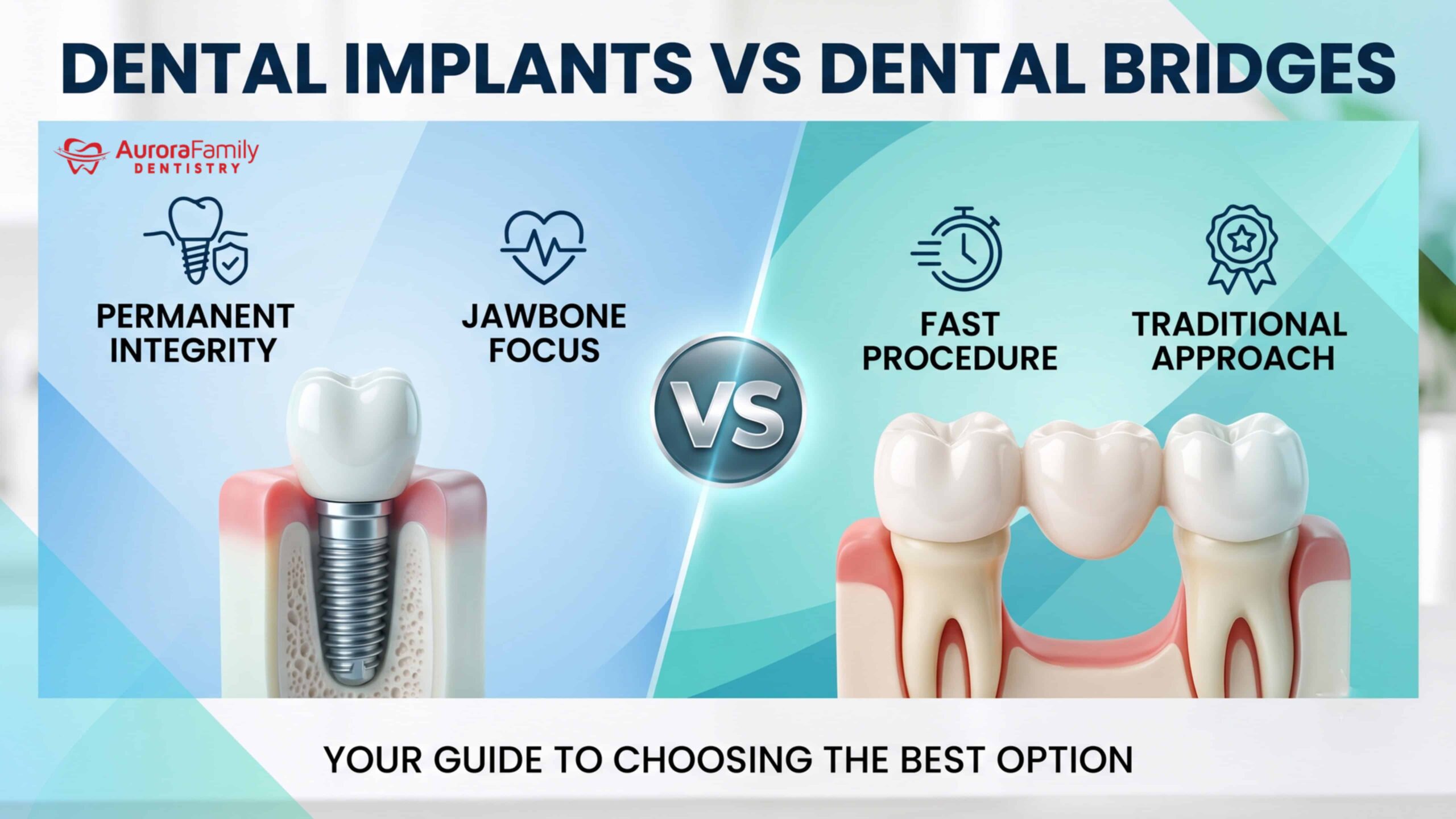
If you have a missing tooth, you don’t have to live with the gap permanently. Dental implants and dental bridges are two common options for replacing a missing tooth, but they work in different ways. So, which is better: a dental implant or a bridge? There is no single answer for everyone. The right option depends on your oral health, jawbone condition, the health of your neighbouring teeth, your budget, and your long-term goals. In this guide, we’ll compare dental implants vs dental bridges to help you understand the differences and what you may want to discuss with your dentist. Dental Implants vs Dental Bridges: Quick Comparison Feature Dental Implants Dental Bridges How it works Uses an implant placed in the jawbone to support a replacement tooth Uses neighbouring teeth to support the replacement tooth Requires surgery Yes Usually no implant surgery Treatment time Usually longer Usually faster Affects neighbouring teeth Does not normally require them to support the replacement tooth Usually involves the neighbouring teeth Jawbone stimulation Helps replace the function of a tooth root Does not replace the tooth root Maintenance Similar to caring for natural teeth, with additional cleaning around the implant Requires cleaning around and underneath the bridge Longevity Can be long-lasting with proper care Can also provide long-term tooth replacement, but may eventually need replacement Best suited for Patients looking for an independent, long-term tooth replacement option Patients looking for a fixed replacement without implant surgery Important: Treatment suitability varies from person to person. Your dentist will need to assess your teeth, gums, bone, bite, and overall oral health before recommending an option. What Is a Dental Implant? A dental implant is a tooth-replacement option that uses a small implant placed into the jawbone to support a replacement tooth. The implant acts as an artificial tooth root. Once the area has healed and the implant has integrated with the bone, a dental crown can be attached to restore the missing tooth. Dental implants are designed to look and function much like natural teeth. If you’d like to understand the potential advantages in more detail, read our guide to the benefits of dental implants. What Is a Dental Bridge? A dental bridge replaces a missing tooth by placing an artificial tooth in the gap and supporting it with the neighbouring teeth. Unlike an implant, a traditional dental bridge does not require an implant to be placed into the jawbone. A bridge can be a practical option for people who want to replace a missing tooth without undergoing implant surgery. Dental Implants vs Dental Bridges: Key Differences 1. How They Replace the Missing Tooth The biggest difference is how each treatment is supported. Dental implant: The implant is placed into the jawbone and acts as the foundation for the replacement tooth. Dental bridge: The replacement tooth is supported by neighbouring teeth. This means an implant is generally an independent tooth replacement, while a traditional bridge relies on the teeth beside the gap. 2. Treatment Time Treatment timelines can differ. A dental bridge can often be completed more quickly because there is no implant healing period. Dental implants generally involve multiple stages, including implant placement and a period of healing before the final restoration is attached. The exact timeline depends on your individual situation and whether additional procedures are required. You can learn more about what to expect in our guide to the dental implant process. 3. Impact on Your Neighbouring Teeth This is another important difference. With a traditional dental bridge, the neighbouring teeth are generally used to support the bridge. With a dental implant, the replacement tooth is supported by the implant itself rather than relying on adjacent teeth. For some patients, preserving healthy neighbouring teeth may be an important consideration when choosing between an implant and a bridge. 4. Jawbone Preservation When a natural tooth is lost, the jawbone in that area can gradually lose volume because the tooth root is no longer stimulating the bone. A dental implant replaces the role of the tooth root and can help maintain the bone in the area. A traditional bridge replaces the visible part of the tooth but does not replace the natural tooth root. This is one reason your dentist may consider the condition of your jawbone when discussing tooth-replacement options. 5. Appearance Both dental implants and bridges can be designed to look natural. A well-made restoration should blend with your surrounding teeth in terms of shape, size, and colour. The final appearance can depend on several factors, including the location of the missing tooth, the health of your gums, and the type of restoration used. 6. Comfort and Function Both options are designed to restore your ability to chew and speak comfortably. A dental implant is fixed into the jawbone, which can provide a stable foundation for the replacement tooth. A dental bridge is also fixed in place rather than being removable like some types of dentures. Your dentist can help you understand how each option may affect your bite and chewing function. Dental Implant vs Bridge: Which Lasts Longer? Both dental implants and bridges can provide long-term tooth replacement when properly planned and maintained. However, they are maintained differently and have different factors that can affect their longevity. The lifespan of either option can depend on: Rather than choosing an option based only on expected lifespan, it’s important to consider which treatment is appropriate for your mouth and long-term oral health. Are Dental Implants Better Than Bridges? Dental implants can offer several advantages, including replacing the missing tooth without using neighbouring teeth for support and helping maintain the jawbone. However, that doesn’t automatically mean an implant is the best choice for every patient. A dental bridge may be a better option in some situations, particularly when a patient wants a fixed tooth replacement without implant surgery or when the surrounding teeth are suitable for supporting a bridge. The best choice depends on your individual dental needs. When Might a Dental Implant Be a
What Happens If You Don’t Replace a Missing Tooth?
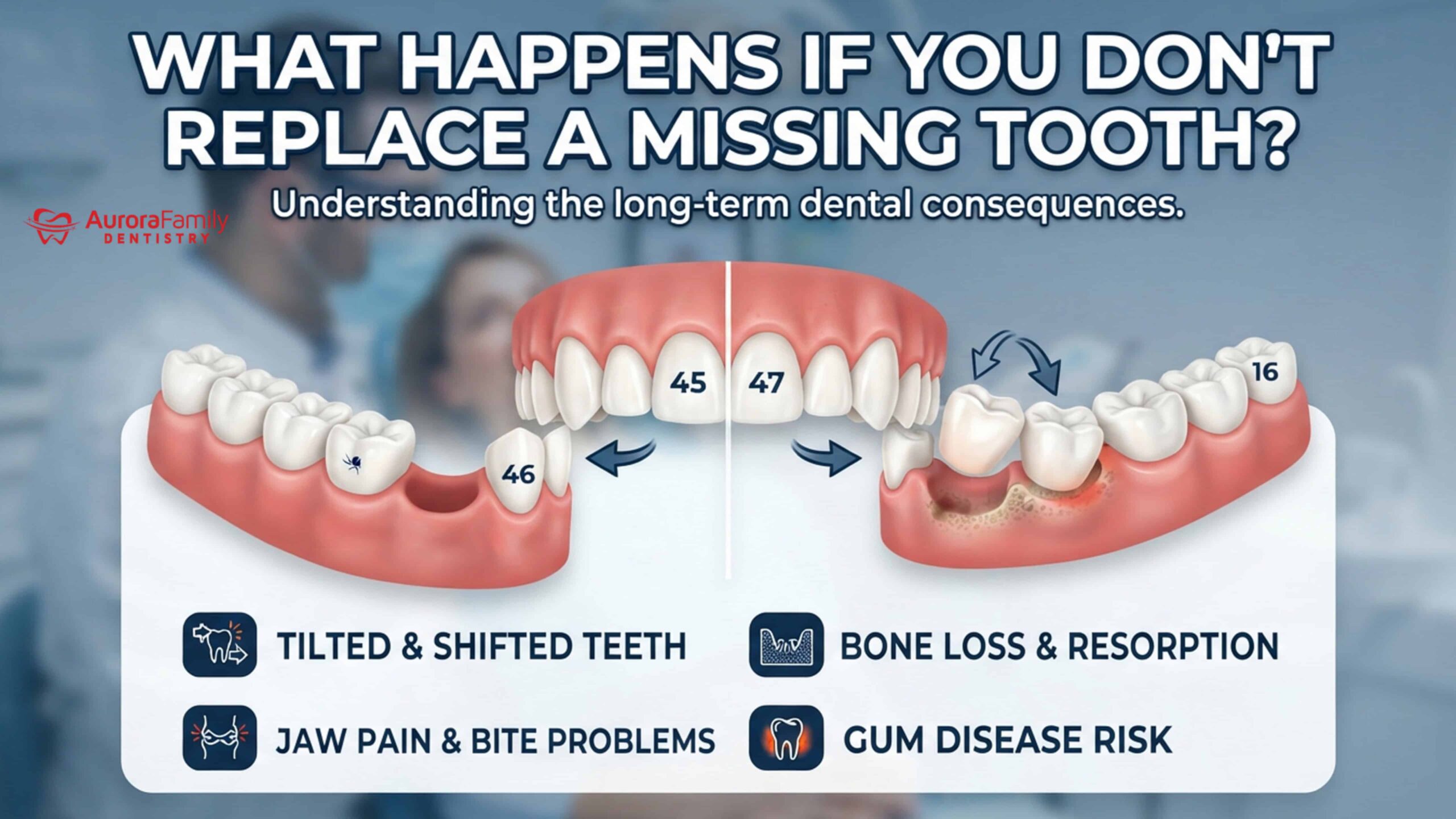
Losing a tooth can happen for many reasons, including tooth decay, gum disease, injury, or an extraction. While a missing tooth may not seem like an urgent problem if it does not cause pain, leaving the space untreated can affect more than just your smile. So, what happens if you don’t replace a missing tooth? Over time, the surrounding teeth can shift, your bite can change, and the jawbone in the area may gradually lose density. The good news is that there are several options for replacing missing teeth. A dentist can assess your oral health and recommend the most appropriate solution for your situation. What Happens When You Leave a Missing Tooth Untreated? A missing tooth creates an empty space in your mouth. Your teeth, gums, jawbone, and bite all work together, so losing one tooth can gradually affect the surrounding structures. Here are some of the common effects of leaving a missing tooth untreated. 1. Your Other Teeth May Shift Your teeth naturally support and interact with one another. When one tooth is missing, the teeth next to the gap may begin to move into the empty space. This movement can: Over time, these changes can make your teeth more difficult to keep clean and may affect your overall oral health. If your teeth have already started shifting, your dentist can discuss whether orthodontic treatment may be appropriate. You can also learn more about ways to straighten teeth without braces. 2. Your Bite Can Change Your upper and lower teeth are designed to work together when you chew. A missing tooth can change how pressure is distributed when you bite. You may start chewing more on one side of your mouth to compensate for the missing tooth. This can put additional stress on some of your remaining teeth. A changed bite may also affect how comfortable your jaw feels when eating or speaking. 3. You May Experience Jawbone Loss One of the most important effects of tooth loss happens below the gumline. The roots of your teeth help stimulate the jawbone. When a tooth is lost, that stimulation is no longer present in the same way. Over time, the bone surrounding the missing tooth can gradually shrink. This is known as bone resorption. Jawbone loss can affect the shape and support of the area around the missing tooth. It can also become an important consideration when planning certain tooth-replacement options. 4. Eating Certain Foods May Become More Difficult Even one missing tooth can affect how you chew. Depending on where the tooth was located, you may find some foods harder to bite or chew comfortably. You may also develop the habit of using the opposite side of your mouth. Replacing the missing tooth can help restore more balanced chewing function. 5. Your Remaining Teeth May Experience More Stress Your remaining teeth may have to do more work when one or more teeth are missing. This can place additional pressure on the teeth that remain, particularly if your bite has changed. Protecting your remaining natural teeth is an important part of managing tooth loss. Regular dental exams can help your dentist monitor changes and identify problems early. If you’re unsure why routine dental examinations are important, see our guide on why you need a dental exam. 6. Cleaning Around Your Teeth Can Become More Difficult When teeth shift into the space left by a missing tooth, new spaces and angles can develop. These areas may be harder to brush and floss effectively. Difficulty cleaning around the teeth can allow plaque and bacteria to build up, potentially increasing the risk of gum problems and tooth decay. Good daily oral hygiene remains important whether or not you have missing teeth. Our daily steps for healthy teeth and gums can help you maintain your oral health at home. 7. A Missing Tooth Can Affect Your Smile A missing front tooth is usually more noticeable, but even a missing back tooth can eventually affect the appearance of your smile if surrounding teeth move. Tooth loss can also affect the shape of the gum and bone around the missing tooth. For many people, replacing a missing tooth is therefore about both function and appearance. How Long Can You Leave a Missing Tooth? There is no single timeframe that applies to everyone. Some people may have a missing tooth for years without experiencing obvious symptoms, while others may notice changes sooner. The location of the missing tooth, your bite, gum health, bone health, and the condition of your remaining teeth can all make a difference. The absence of pain does not necessarily mean that there is no problem. If you have recently lost a tooth or have had one removed, it is a good idea to discuss your options with a dentist rather than simply leaving the space untreated. Do All Missing Teeth Need to Be Replaced? Not necessarily. The best approach depends on which tooth is missing, why it was lost, your overall oral health, and how the missing tooth affects your bite and function. Your dentist may recommend monitoring the area in some situations. In other cases, replacing the tooth may help protect your remaining teeth and restore chewing function. A dental examination can help determine whether replacement is recommended in your particular case. What Are the Options for Replacing a Missing Tooth? There are several ways to replace a missing tooth. Your dentist will consider factors such as your oral health, jawbone condition, the number of missing teeth, and your preferences. Dental Implants A dental implant is a long-term tooth-replacement option that uses an implant placed in the jawbone to support a replacement tooth. Dental implants can help restore both the appearance and function of a missing tooth. If you’re considering this option, read more about the benefits of dental implants. You can also learn about the different stages involved in treatment in our guide to the dental implant process. Dental Bridges A dental bridge can replace a missing tooth by
How to Straighten Teeth Without Braces in Aurora
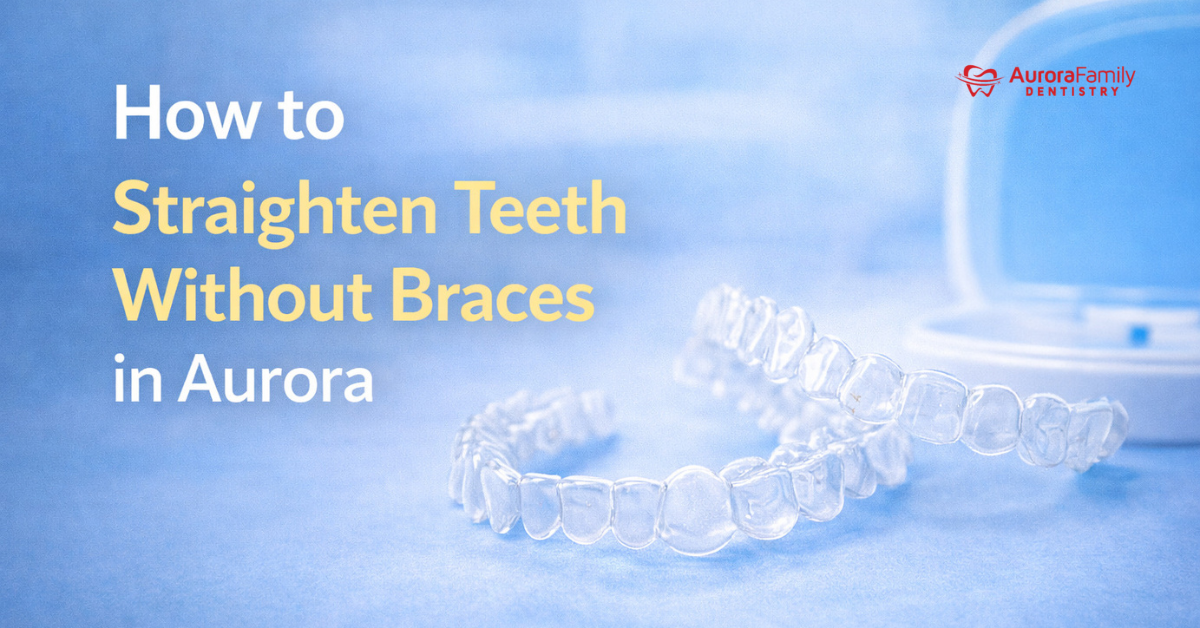
Curious how to straighten teeth without braces? At Aurora Family Dentistry, we offer modern teeth straightening options that fit your lifestyle—so when you search “straightening teeth near me,” you’ll find solutions close to home. Teeth straightening options (no metal braces) If you need fixed appliances for complex movements, clear ceramic braces may be discussed—but if you prefer to straighten teeth without braces, aligners are usually the first choice. How do you straighten teeth without braces? Ready to get started? Book an appointment to see which option fits your smile and goals. Timeline and results Many cases finish in about 6–18 months, depending on complexity and wear‑time consistency. Minor alignment can be quicker; more complex movements take longer. We’ll show you an estimated timeline at your consultation. Cost overview Total cost depends on case complexity, the number of aligners, and refinements. We’ll provide a clear estimate, review insurance, and discuss payment options at your visit. Why choose Aurora Family Dentistry for teeth straightening? FAQs: Straighten teeth without braces How to straighten teeth without braces? Clear aligners like Invisalign move teeth with a series of removable trays. Cosmetic options (bonding/veneers) can improve the look of mild irregularities but don’t move teeth. Do clear aligners work for everyone? Most mild to moderate cases are excellent candidates. Complex movements may still be possible with aligners; if not, we’ll discuss alternatives. How long does it take to straighten teeth with aligners? About 6–18 months for many patients. Consistent 20–22 hour daily wear is key. Are aligners comfortable? Yes. They’re smooth and snug. You’ll feel gentle pressure for a day or two with each new tray. Can I eat and drink with aligners in? Remove aligners to eat and for any beverage besides water. Brush before putting aligners back in. What happens after I’m done? You’ll wear retainers to maintain alignment. We’ll outline a schedule that fits your case.Looking for “straightening teeth near me”? Take the first step—schedule a consultation with Aurora Family Dentistry today.
Tips for Overcoming Dental Anxiety: How to Feel More Comfortable at the Dentist
Feeling nervous about visiting the dentist is more common than you might think. In fact, a large number of people experience dental anxiety, ranging from mild nervousness before an appointment to severe fear that leads them to avoid dental care altogether. While skipping dental visits may seem easier in the short term, delaying treatment can allow small oral health problems to become more serious and difficult to treat. The good news is that modern dentistry focuses on patient comfort as much as oral health. With compassionate care, open communication, and today’s advanced treatment techniques, many people find dental visits far less stressful than they expected. Whether you’ve postponed an appointment because of fear or simply feel uneasy before dental treatment, these practical tips can help you feel more confident and comfortable. What Is Dental Anxiety? Dental anxiety is the feeling of fear, nervousness, or stress associated with visiting the dentist or receiving dental treatment. For some people, anxiety begins days before their appointment. Others may only feel nervous when sitting in the dental chair. Dental anxiety can affect patients of all ages and is completely understandable. Recognizing these feelings is the first step toward making future dental visits more positive. What Causes Dental Anxiety? There isn’t one single cause of dental anxiety. Often, it’s a combination of experiences, concerns, and emotions. Common reasons include: Understanding what’s causing your anxiety allows your dental team to personalize your care and provide additional support. Signs You May Be Experiencing Dental Anxiety Dental anxiety affects everyone differently. Common signs include: If any of these sound familiar, you’re not alone and your dentist can help. 8 Tips for Overcoming Dental Anxiety Small changes before and during your appointment can make a big difference. 1. Talk Openly with Your Dentist One of the most effective ways to reduce anxiety is simply letting your dentist know how you’re feeling. Your dental team can: Open communication helps build trust and makes appointments feel much less overwhelming. 2. Schedule Appointments at a Time That Works Best for You If possible, book your appointment during a time when you’re least likely to feel rushed or stressed. Many patients find morning appointments helpful because they spend less time worrying throughout the day. 3. Practice Relaxation Techniques Simple breathing exercises can help calm your body’s stress response. Before and during your appointment, try: These methods may help reduce muscle tension and make you feel more relaxed. 4. Bring Headphones or Listen to Music Listening to your favourite music, podcast, or calming sounds can help distract your attention from dental equipment and create a more relaxing environment. Some patients also enjoy listening to audiobooks during longer procedures. 5. Agree on a Hand Signal Feeling in control often reduces anxiety. Before treatment begins, agree on a simple hand signal that lets your dentist know you’d like to pause or ask a question. Knowing you can stop at any time often provides significant reassurance. 6. Consider Sedation For patients with moderate to severe dental anxiety, sedation may provide additional comfort. Depending on your treatment needs, your dentist may recommend options such as: Your dentist will discuss whether sedation is suitable based on your medical history and planned treatment. 7. Keep Up with Regular Dental Visits Avoiding the dentist often increases anxiety over time. Routine checkups help detect small problems before they become larger issues that require more extensive treatment. Regular visits also help you become more familiar with your dental team, making future appointments feel more comfortable. 8. Celebrate Small Wins Every successful dental visit builds confidence. Whether you complete a routine cleaning or a more involved procedure, acknowledge your progress. Positive experiences can gradually replace previous fears and make future appointments easier. How Modern Dentistry Helps Reduce Anxiety Dental care has changed significantly over the years. Today’s dental practices often include: Many patients are pleasantly surprised by how comfortable modern dental treatment can be. When Dental Anxiety Prevents You from Getting Care If fear has caused you to postpone dental visits for months or even years it’s never too late to return. Your dentist’s goal isn’t to judge you. Instead, they’re there to understand your concerns, assess your oral health, and create a treatment plan that moves at a pace you feel comfortable with. Starting with a simple consultation or examination is often the first step toward rebuilding confidence. Is dental anxiety common? Yes. Dental anxiety affects millions of people worldwide and ranges from mild nervousness to severe dental phobia. Can dentists help patients with dental anxiety? Absolutely. Dentists regularly care for anxious patients by providing compassionate communication, explaining procedures, offering breaks, and discussing comfort options, including sedation when appropriate. What should I tell my dentist if I’m nervous? Be honest about your concerns, previous experiences, and any specific fears you have. This allows your dental team to tailor your care and help you feel more comfortable. Is sedation dentistry safe? For suitable candidates, sedation dentistry is generally considered safe when administered and monitored by trained dental professionals. Your dentist will review your medical history to determine the most appropriate option. Will avoiding the dentist make problems worse? In many cases, yes. Delaying routine dental care can allow small issues to progress into larger problems that may require more extensive treatment. A Comfortable Dental Experience Starts with the Right Team Dental anxiety is real, but it doesn’t have to stand between you and a healthy smile. With open communication, gentle care, and modern treatment options, many patients discover that visiting the dentist is far less stressful than they imagined. At Aurora Family Dentistry, we understand that every patient has different comfort levels. Our compassionate team takes the time to listen, explain your treatment options, and create a positive, supportive environment where you can receive the care you need with confidence. Whether it’s your first visit in years or you’re simply looking for a more comfortable dental experience, we’re here to help every step of the way. Q1. What causes dental anxiety? Dental anxiety

Root Canal or Extraction: Which Do You Need?
A severely damaged or infected tooth can leave you wondering whether it can be saved or if it needs to be removed. In many cases, dentists will recommend saving your natural tooth whenever possible, often through root canal treatment. However, when a tooth is too damaged to restore, extraction may be the healthier long-term option. Understanding the differences between a root canal and tooth extraction can help you make an informed decision about your oral health. While every situation is unique, your dentist will recommend the treatment that provides the best long-term outcome for your smile. Understanding the Difference Between a Root Canal and Tooth Extraction Although both treatments address damaged or infected teeth, they have very different goals. What Is a Root Canal? A root canal is a restorative procedure that removes infected or damaged pulp from inside the tooth. After cleaning and disinfecting the root canals, the tooth is sealed and typically restored with a dental crown to protect its strength and function. The goal is to save your natural tooth while eliminating pain and infection. What Is a Tooth Extraction? A tooth extraction involves removing a tooth that cannot be safely or predictably restored. After the tooth is removed, your dentist may recommend replacing it with a dental implant, bridge, or denture to restore your smile and maintain proper oral function. When Is a Root Canal Recommended? A root canal is often the preferred treatment when the tooth structure is still healthy enough to be restored. Your dentist may recommend a root canal if you have: Saving a natural tooth whenever possible helps preserve your bite, jawbone, and surrounding teeth. When Is a Tooth Extraction the Better Option? Although preserving natural teeth is usually the goal, extraction may be necessary in certain situations. A tooth may need to be removed if: Removing a non-restorable tooth can eliminate pain, prevent infection from spreading, and protect your overall oral health. Root Canal vs. Extraction: A Side-by-Side Comparison Choosing between a root canal and extraction depends on several factors, including the condition of your tooth, your oral health, and your long-term treatment goals. Feature Root Canal Tooth Extraction Saves Your Natural Tooth ✅ Yes ❌ No Eliminates Infection ✅ Yes ✅ Yes Requires Tooth Replacement ❌ No ✅ Usually Recommended Protects Jawbone ✅ Yes Tooth replacement needed to preserve bone Treatment Time Usually 1–2 visits Usually one visit (replacement may require additional appointments) Long-Term Goal Preserve the natural tooth Remove a non-restorable tooth In many situations, preserving your natural tooth with a root canal is the most conservative and cost-effective long-term solution. Which Treatment Is Less Painful? One of the most common concerns patients have is whether a root canal or extraction is more painful. Thanks to modern dental techniques and local anesthesia, both procedures are designed to be comfortable. Many patients are surprised to learn that a root canal often feels similar to having a filling. After treatment, any discomfort is typically mild and temporary. Following an extraction, some soreness and swelling are expected as the area heals. Your dentist will provide detailed aftercare instructions to help you recover comfortably. Recovery: What Can You Expect? Recovery depends on the procedure performed and your individual healing process. After a Root Canal Most patients return to work or normal activities the next day. Mild sensitivity may occur for a few days, especially when chewing. To protect the treated tooth, your dentist may recommend placing a dental crown. After a Tooth Extraction Healing usually takes a little longer because the extraction site needs time to close. To encourage proper healing: Why Saving Your Natural Tooth Is Often the Best Choice Natural teeth are designed to work together as a complete system. Whenever possible, preserving your natural tooth offers several advantages. Benefits include: While dental implants and bridges are excellent restorative options, nothing functions exactly like your natural tooth. What Happens After a Tooth Extraction? If extraction is necessary, replacing the missing tooth is often recommended to maintain your oral health. Common replacement options include: Dental Implants Dental implants replace both the tooth and its root, providing the closest alternative to a natural tooth. Dental Bridges Bridges fill the gap using neighbouring teeth for support. Dentures Partial or full dentures may be recommended when multiple teeth are missing. Your dentist will discuss the option that’s best suited to your needs. How Does Your Dentist Decide? Choosing between a root canal and extraction isn’t based on one factor alone. Your dentist evaluates: Digital X-rays and a comprehensive examination allow your dentist to recommend the treatment most likely to provide lasting success. Frequently Asked Questions Is it better to get a root canal or have the tooth pulled? If the tooth can be predictably restored, preserving your natural tooth with a root canal is often the preferred option. However, extraction may be necessary when the tooth cannot be saved. Can a root canal fail? While root canals have a high success rate, complications can occasionally occur. In some cases, retreatment or endodontic surgery may be recommended. Does a tooth need to be replaced after extraction? In many cases, yes. Replacing a missing tooth helps maintain chewing function, prevents neighbouring teeth from shifting, and supports jawbone health. Which procedure is more affordable? The cost depends on the complexity of treatment and whether tooth replacement is required after extraction. Although extraction may initially cost less, replacing the missing tooth can increase overall treatment costs. How do I know which treatment I need? Only a dental examination and diagnostic imaging can determine whether your tooth can be saved or should be removed. Make the Right Choice for Your Oral Health When faced with a damaged or infected tooth, deciding between a root canal and an extraction can feel overwhelming. The good news is that you don’t have to make the decision alone. A thorough examination, digital imaging, and a personalized treatment plan help determine the option that best protects your long-term oral health. At Aurora Family Dentistry,